History
History
We began as one of the first Muslim Schools in the UK.
When Yusuf and Fawzia Islam had their second daughter, the question of schooling was top of their agenda. It was the 80s. And education was not an equal space for Muslim children in the UK.
There were many government-funded faith schools serving the Christian and Jewish community. But an Islamic school that could provide a safe and inclusive environment for Muslim students to excel academically, remained a distant prospect.
In 1983, despite many challenges, Islamia Primary School was founded to meet a vital need. As our children grew and those first students progressed, we expanded into secondary education —establishing a boys' school in 1996 (following the success of our girl's school, established in 1989).
Our enduring legacy has been to build the way where none exists. Almost three decades on, Brondesbury College continues to nurture the British Muslim pioneers of tomorrow.
The first UK Muslim School to gain state funding
Establishing a Muslim school in the UK was a mission fraught with challenges. This was Thatcher’s Britain, where funding cuts were affecting education and the working-class family disproportionately.
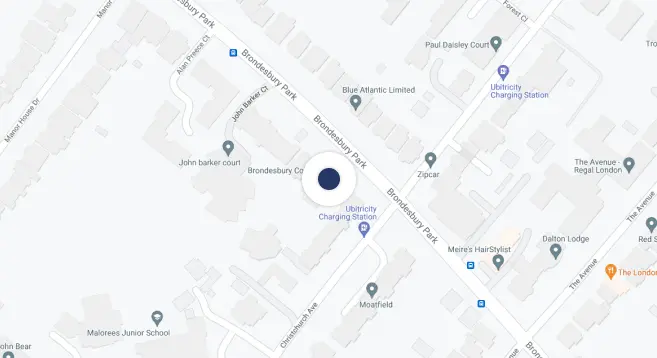
Yusuf Islam began by enlisting the help of parents who attended his mosque circle. A playgroup for toddlers was opened, hosted by Fawzia Islam and many community mothers. Soon, those parents began enrolling their children in the first kindergarten-class of what would become an Islamic School in London. It wasn’t long before the hunt for a suitable building culminated in the purchase of a large Tudor style house in leafy Brondesbury Park.
Pupils are extremely courteous and respectful to each other and adults. They are highly motivated and have a thirst for learning. Pupils feel very proud of their school.
Ofsted 2018

In 1983, Yusuf and Fawzia Islam were blessed with their third daughter. And Islamia School was made official. Its name came about like many wonderful things that are born out of want. More specifically, in our case, an accident pertaining to a shortage letterset transfers for promo leaflets. There was only one ‘C’ to be exact. And that was needed to spell ‘School.’
Funding was always an issue in those early days. Despite tuition fees and private donations, Yusuf Islam remained the school’s primary benefactor through many of the crises we faced.
Gaining Voluntary Aided (VA) status—just as other faith-based schools had—would have solved our problems. It would have meant qualifying for 100% of running costs and a substantial portion of capital costs. But the process of securing it proved long and difficult.
Yusuf Islam applied repeatedly for Islamia’s right to receive state funding. Despite meeting all the requirements, our applications were rejected multiple times. Meanwhile, Jewish and Christian schools were granted VA status with ease, even nearby ones during our own application process.
Yusuf Islam refused to give up. After almost a decade of ceaseless campaigning, we finally won VA status in 1998, becoming the first Muslim school in Britain to do so.
You can read more about Islamia’s battle to gain state funding for UK Muslim schools, here in The Conversation article by Helen Carr.
A reputation for academic excellence
As our secondary schools developed with leaps and bounds, our students began to achieve consistently high results in the GCSE exam timetables. Meanwhile, Ofsted was rating our quality of teaching ‘outstanding’ and said the breadth of our curriculum was ‘a real strength’ for our schools.
In 2015, our sister school, Islamia Girls, featured in The Times. We’d made it into the top 50 schools in that year’s secondary school league tables, with 100% of our students being awarded five good GCSEs, and 58% achieving the English baccalaureate. Our headteacher at the time, Sadaqat Jabeen was quoted, as she praised our girls for being competitive.
 The Times (January 30 2015) article featuring Islamia Girls Secondary School.